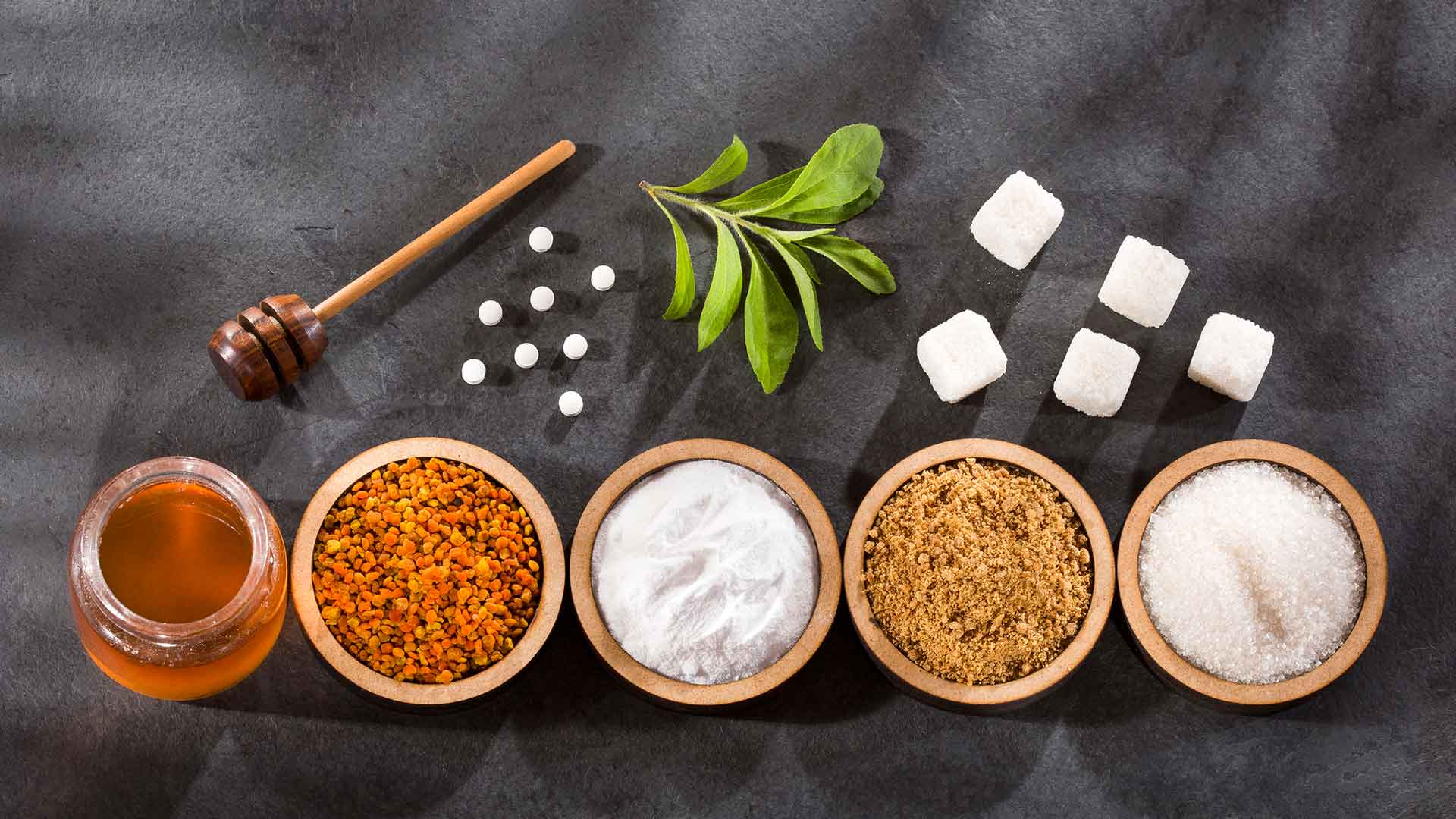
Sugar consumption is linked to obesity, diabetes, heart disease, and inflammation. Naturally, many people turn to “healthier sugar alternatives” — stevia, monkfruit, honey, jaggery, coconut sugar, aspartame, sucralose, erythritol, dates, and maple syrup.
But here’s the big question: are these alternatives truly healthy, or is avoiding them altogether the best choice?
🚫 Why Avoiding All Sweeteners Can Be Healthiest
-
Resets your palate – even zero-calorie sweeteners keep your brain addicted to sweet taste.
-
Supports gut and hormone balance – some artificial options may alter gut microbiota or affect insulin in sensitive people.
-
Breaks the “sweet cycle” – constantly replacing sugar with alternatives doesn’t cure cravings.
Still, sugar substitutes may help as a transition tool — especially for people with diabetes or obesity — if used in moderation.
📊 Comparison of 10 Common Sugar Alternatives
1. Stevia
-
GI: 0
-
Pros: Natural, zero-calorie, safe for diabetics, no blood sugar spike.
-
Cons: Bitter aftertaste for some, may cause bloating in excess.
-
Cancer: No link found.
-
Gut/Heart: Generally safe; no major adverse evidence.
👉 Rating: 9/10
2. Monkfruit Sweetener
-
GI: 0
-
Pros: Natural, zero-calorie, antioxidant properties, safe in diabetes.
-
Cons: Expensive, often blended with other fillers.
-
Cancer: No link.
-
Gut/Heart: No known risks.
👉 Rating: 9/10
3. Honey
-
GI: 58–60 (similar to sugar)
-
Pros: Natural, contains antioxidants and trace nutrients.
-
Cons: Still high in sugar and calories; raises blood glucose.
-
Cancer: No risk, but excessive intake contributes to obesity-related risks.
-
Gut/Heart: Can promote better cough relief, but not suitable for diabetes control.
👉 Rating: 5/10
4. Dates
-
GI: 42–55 (lower than sugar)
-
Pros: Natural, contain fiber, potassium, and micronutrients.
-
Cons: Calorie dense; raise blood sugar if overconsumed.
-
Cancer: No link; antioxidant-rich, may offer protective benefits.
-
Gut/Heart: Better than refined sugar thanks to fiber and nutrients.
👉 Rating: 7/10
5. Coconut Sugar
-
GI: ~54
-
Pros: Trace minerals, slightly lower GI than white sugar.
-
Cons: Nearly same calories and carbs as sugar; raises glucose.
-
Cancer: No link.
-
Gut/Heart: No proven benefits; still adds excess calories.
👉 Rating: 5/10
6. Jaggery (Gur)
-
GI: ~84 (higher than table sugar)
-
Pros: Contains iron and minerals, “natural” image.
-
Cons: High GI; spikes blood sugar; same calories as sugar.
-
Cancer: No link.
-
Gut/Heart: No advantage over sugar; risky for diabetics.
👉 Rating: 4/10
7. Maple Syrup
-
GI: ~54
-
Pros: Contains antioxidants, zinc, manganese.
-
Cons: Still sugar; high calorie.
-
Cancer: No link.
-
Gut/Heart: No unique benefits beyond trace nutrients.
👉 Rating: 5/10
8. Aspartame (Artificial Sweetener)
-
GI: 0
-
Pros: Zero calories, no glucose spike, widely studied.
-
Cons: Controversial safety image.
-
Cancer: Classified by WHO (IARC, 2023) as “possibly carcinogenic” at high intakes — evidence is limited, not conclusive. Safe below 40 mg/kg/day (about 9–14 cans of diet soda for a 70 kg adult).
-
Gut/Heart: No proven heart risks; some people report headaches.
👉 Rating: 1/10 (safety concern)
9. Sucralose (Splenda)
-
GI: 0
-
Pros: Zero calorie, widely used, doesn’t spike blood sugar.
-
Cons: May alter gut microbiome; can form harmful compounds when heated at very high temperatures.
-
Cancer: No human link found; safe within daily intake.
-
Gut/Heart: Possible microbiome impact.
👉 Rating: 1/10 (safety concern)
10. Erythritol (Sugar Alcohol)
-
GI: 0–1
-
Pros: Almost zero calories, doesn’t spike blood sugar.
-
Cons: In high amounts, may cause bloating or diarrhea.
-
Cancer: No evidence linking to cancer.
-
Heart: 2023 study found higher blood erythritol levels associated with cardiovascular events, but this was correlation, not proven cause. Research is ongoing.
👉 Rating: 1/10 (safety concern)
📊 Comparison of Sugar Alternatives
| Sweetener | Glycemic Index (GI) | Pros | Cons | Cancer / Gut / Heart Concerns | Rating (1–10) |
|---|---|---|---|---|---|
| Stevia | 0 | Natural, zero calorie, safe for diabetics | Bitter aftertaste, mild bloating in excess | No cancer link; safe overall | 9/10 |
| Monkfruit | 0 | Natural, zero calorie, antioxidant-rich | Expensive, less available | No cancer link; safe overall | 9/10 |
| Honey | 58–60 | Natural, antioxidants | High sugar & calories, raises glucose | No cancer link; safe in moderation | 5/10 |
| Dates | 42–55 | Fiber, potassium, antioxidants | Calorie dense, raises glucose if overdone | No cancer link; protective due to antioxidants | 6/10 |
| Coconut Sugar | ~54 | Trace minerals, slightly lower GI than sugar | High in sugar/calories | No cancer link | 4/10 |
| Jaggery | ~84 | Contains iron, minerals | Very high GI, spikes blood sugar | No cancer link | 4/10 |
| Maple Syrup | ~54 | Contains zinc, manganese, antioxidants | High calorie, raises glucose | No cancer link | 5/10 |
| Aspartame | 0 | Zero calorie, well-studied | Controversial, artificial | Possibly carcinogenic (WHO 2023) at very high intakes; safe below 40 mg/kg/day | 1/10 |
| Sucralose | 0 | Zero calorie, doesn’t spike glucose | May affect gut microbiome; not heat-stable | No cancer link; possible gut impact | 1/10 |
| Erythritol | 0–1 | Almost zero calories, safe for diabetics | Can cause bloating/diarrhea in excess | No cancer link; 2023 study linked high levels to heart risk (not proven causal) | 1/10 |
✅ Bottom Line
-
Best options (in moderation): Stevia, Monkfruit.
-
Okay sometimes: Dates, Maple syrup, Honey.
-
Not much better than sugar: Jaggery, Coconut sugar.
-
Artificial options: Aspartame and Sucralose are considered safe at normal intake, but long-term concerns about gut health and (for aspartame) a possible cancer link make natural options preferable.
🌿 Healthiest Choice?
The healthiest long-term strategy is not to rely on any sugar alternative — but to reduce your overall need for sweetness. Use fruit for natural sweetness, focus on protein and fiber to control cravings, and retrain your palate.
🔗 You May Also Find These Readings Helpful:

Akanksha Sharma
Dr Akanksha Sharma (MBBS, MD) is a physician and women’s health nutrition specialist, and the founder of IYSA Nutrition. She provides evidence-based, doctor-led nutrition guidance for pregnancy, postpartum recovery, PCOS, child nutrition, and family health, helping women make calm, informed decisions about their health and their children’s well-being.