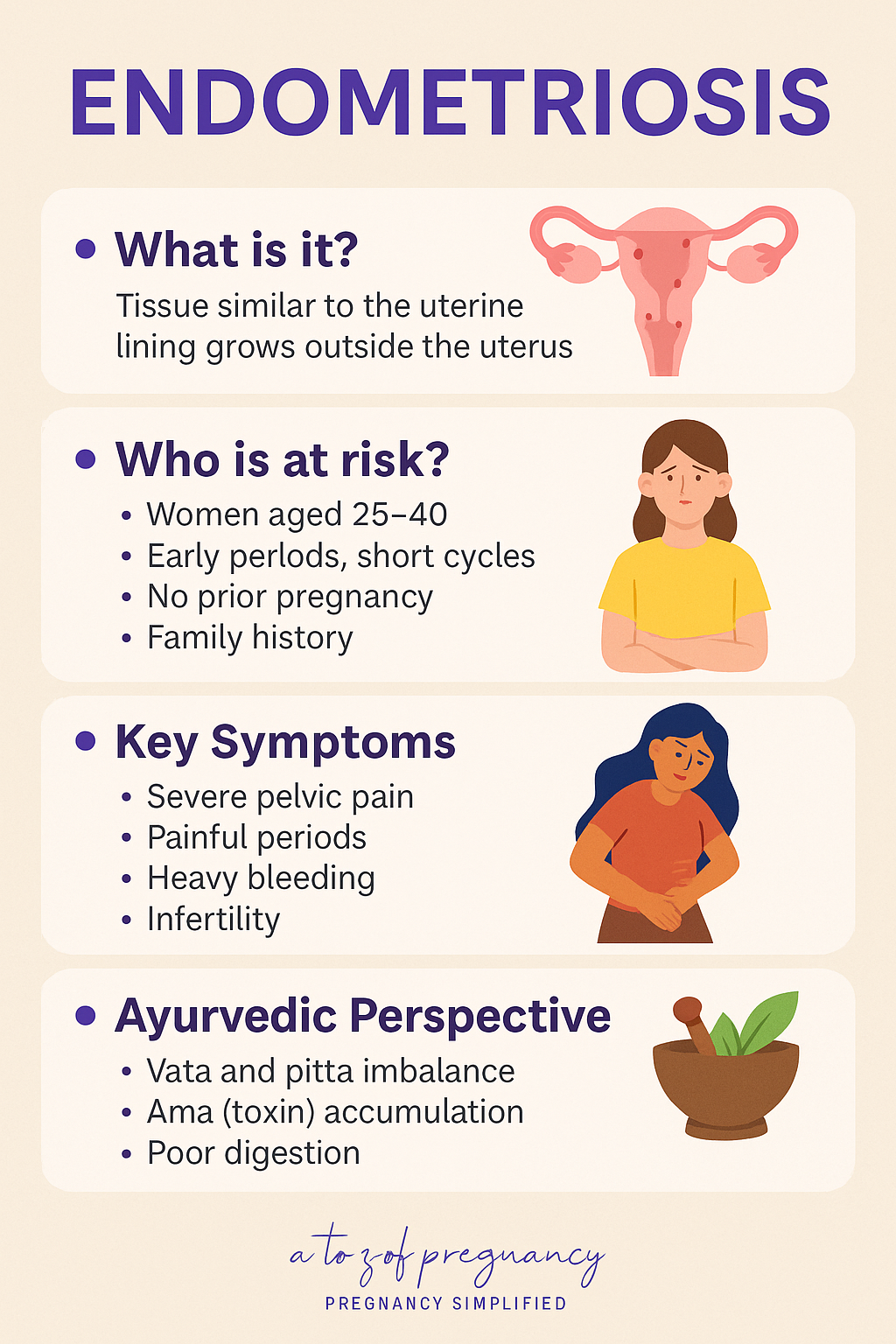
Endometriosis is a complex, often misunderstood condition that affects millions of women worldwide. It’s more than just “bad periods” — it’s a chronic disorder that can have profound effects on a woman’s physical, emotional, and reproductive health. Let’s dive deep into what endometriosis really is, why it happens, who is at risk, its symptoms, long-term implications, and how it can be managed holistically, including the insights from Ayurveda.
🌺 What is Endometriosis?
Endometriosis occurs when tissue similar to the lining of the uterus (endometrium) starts growing outside the uterus — on the ovaries, fallopian tubes, the outer surface of the uterus, or other pelvic organs . This tissue behaves like normal uterine lining — it thickens, breaks down, and bleeds with each menstrual cycle. But since it has no way to exit the body, it becomes trapped, causing inflammation, cysts, scar tissue, and adhesions.
In simple terms:
👉 It’s like having monthly mini-wounds inside your body that cannot heal properly.
🌼 Why Does Endometriosis Happen?
The exact cause of endometriosis remains unclear, but several theories exist :
-
Retrograde Menstruation: Menstrual blood flows backward through the fallopian tubes into the pelvic cavity instead of leaving the body.
-
Immune System Dysfunction: The immune system may fail to recognize and destroy misplaced endometrial tissue.
-
Genetics: If your mother or sister has endometriosis, your chances are higher.
-
Hormonal Factors: High levels of estrogen may promote the growth of endometriotic tissue.
-
Embryonic Cell Transformation: Hormones like estrogen may transform embryonic cells into endometrial-like cells during puberty.
🌸 Who is More Likely to Get Endometriosis?
Certain groups are at a higher risk :
-
Women aged 25 to 40 years.
-
Women who have never given birth.
-
Those with early onset of periods (before age 11) or short menstrual cycles (less than 27 days).
-
Women with heavy, prolonged periods.
-
Those with a family history of endometriosis.
-
Women with immune system disorders.
🌺 Symptoms of Endometriosis
Symptoms can vary widely — some women have severe pain, while others may have no symptoms at all . Common signs include:
-
Severe pelvic pain, especially during menstruation (dysmenorrhea) 🩸
-
Pain during intercourse (dyspareunia) 😖
-
Painful bowel movements or urination, especially during periods 🚽
-
Heavy menstrual bleeding or bleeding between periods 💧
-
Infertility or difficulty conceiving 👶
-
Chronic fatigue, bloating, nausea 🌫️
Important: The intensity of pain is not always proportional to the extent of disease. Some women with mild endometriosis may have severe pain, and vice versa.
🌼 Implications in the Long Run
If left untreated, endometriosis can lead to :
-
Chronic pelvic pain 🌪️
-
Infertility (affects approximately 30-50% of women with endometriosis)
-
Ovarian cysts (endometriomas) 🥚
-
Adhesions and scar tissue that can cause organs to stick together
-
Increased risk of certain cancers (although rare)
-
Emotional impact: Anxiety, depression, and reduced quality of life
Thus, early diagnosis and management are crucial.
🌸 How Endometriosis Can Be Managed (Modern Medicine)
While there’s no permanent cure yet, endometriosis can be effectively managed :
🔹 1. Pain Management
-
NSAIDs (e.g., ibuprofen) for pain relief.
🔹 2. Hormonal Therapy
-
Hormonal contraceptives, progestins, Gonadotropin-releasing hormone (GnRH) agonists to reduce or eliminate menstruation.
🔹 3. Surgery
-
Laparoscopy to remove endometrial implants and scar tissue.
🔹 4. Fertility Treatment
-
Assisted reproductive technologies like IVF for women facing infertility.
🔹 5. Supplementation
- Omega-3 fatty acids
- Vitamin supplementation (based on deficiencies
🔹 6. Lifestyle and Diet Changes
-
Anti-inflammatory diets 🌱
-
Regular exercise 🏃♀️
-
Stress reduction techniques 🧘♀️
🌼 Ayurvedic Perspective on Endometriosis
Ayurveda views endometriosis as a disorder involving vitiation of Vata dosha, primarily Apana Vata (which governs the reproductive organs and elimination).
🌿 Causes According to Ayurveda:
-
Accumulation of Ama (toxins) due to poor digestion.
-
Imbalance in Rakta dhatu (blood tissue) and Artava dhatu (reproductive tissues).
-
Emotional stress and suppression of natural urges disrupting Vata.
🌿 Symptoms (Lakshanas) in Ayurveda:
-
Severe yonishoola (pelvic pain)
-
Ativyapad (irregular or painful menstruation)
-
Yoni vyapad (uterine disorders)
🌿 Ayurvedic Management:
🔸 Detoxification (Shodhana):
-
Gentle Panchakarma therapies like Virechana (purgation therapy) to remove toxins.
🔸 Balancing Vata:
-
Use of Basti therapy (medicated enemas) to stabilize Apana Vata.
🔸 Rakta Shodhana:
-
Blood-purifying herbs like Manjistha, Neem, and Turmeric.
🔸 Herbal Remedies:
-
Ashoka (Saraca asoca) – uterine tonic.
-
Shatavari (Asparagus racemosus) – supports hormonal balance.
-
Guggulu formulations for reducing inflammation.
🔸 Diet and Lifestyle:
-
Warm, cooked foods 🥣
-
Avoidance of cold, dry, heavy, and processed foods.
-
Incorporating meditation and gentle yoga 🧘♀️
🌺 Final Thoughts 🌸
Endometriosis is a multifaceted condition that requires holistic understanding and management.
While modern medicine offers crucial diagnostic and therapeutic tools, Ayurveda offers a deep, nurturing, and preventive approach by addressing root imbalances.
✨ Key Takeaways:
-
Early recognition of symptoms is vital.
-
Diet, stress management, and gentle detoxification play a huge role.
-
Integrated care (modern + Ayurveda) often provides the best results.
With the right care, support, and lifestyle changes, women with endometriosis can live full, vibrant lives! 🌷
🔗 You May Also Find These Readings Helpful:
-
[Eat to Beat Period Pain: Foods and Drinks That Help with Endometriosis Cramps]
-
[The Rise of Fem-Tech: Empowering Women’s Health Through Technology]
📚 References:
-
Giudice LC. Clinical practice. Endometriosis. N Engl J Med. 2010;362(25):2389-2398. doi:10.1056/NEJMcp1000274.🔗 Link
-
Vercellini P, et al. Pathogenesis of endometriosis: the genetic/epigenetic theory. Fertil Steril. 2013;99(3):747-755. 🔗 Link
-
Nnoaham KE, et al. Impact of endometriosis on quality of life: a systematic review. Fertil Steril. 2011;96(2):e1-e9. 🔗 PubMed
-
Simoens S, et al. The burden of endometriosis: costs and quality of life of women with endometriosis and treated in referral centres. Hum Reprod. 2012;27(5):1292-1299. 🔗 Link
-
Dunselman GA, et al. ESHRE guideline: management of women with endometriosis. Hum Reprod. 2014;29(3):400-412. 🔗 Link
-
Sharma RK, Dash B. Charaka Samhita (Ayurvedic classical text). 🔗 Link

Akanksha Sharma
Dr Akanksha Sharma (MBBS, MD) is a physician and women’s health nutrition specialist, and the founder of IYSA Nutrition. She provides evidence-based, doctor-led nutrition guidance for pregnancy, postpartum recovery, PCOS, child nutrition, and family health, helping women make calm, informed decisions about their health and their children’s well-being.