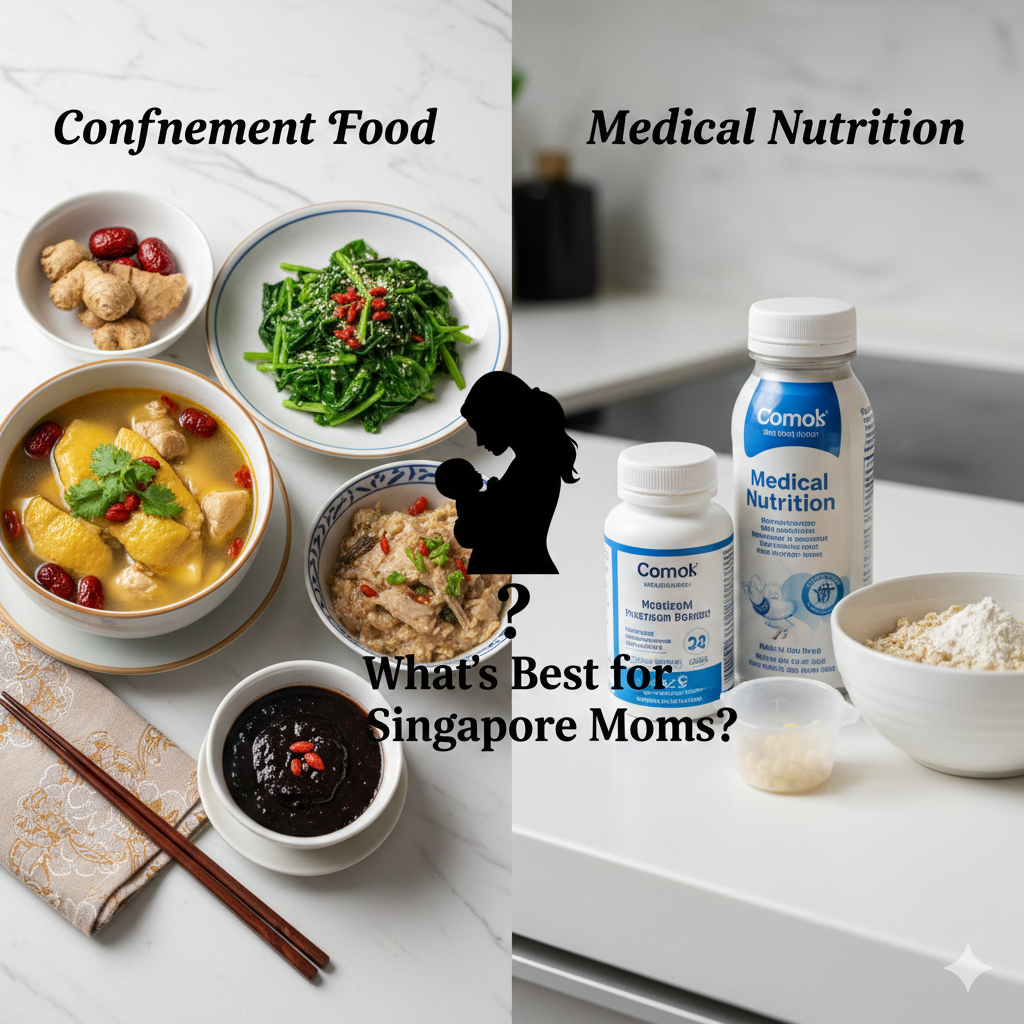
In Singapore, “confinement food” is still a big part of postpartum recovery—whether you’re Chinese (zuò yuè zi), Malay (pantang), or Indian postpartum traditions. Many of these practices are comforting and supportive. But some rules can accidentally lead to low protein, low fibre, constipation, fatigue, or nutrient gaps—especially in a hot, humid climate. 🌿
So what’s the best approach?
Keep the cultural wisdom that helps (warmth, rest, simple meals, family support) and pair it with medical nutrition (adequate protein, iron, iodine, calcium, omega-3s, hydration, and fibre).
Singapore research confirms that confinement practices are still very common across ethnic groups, with differences in food habits and support systems.
Why Confinement Food Feels Right (and often helps) 😊
Traditional postpartum eating usually focuses on:
-
Warm, cooked foods (soups, stews, porridges)
-
Easy digestion (soft textures)
-
Herbs/spices (ginger, turmeric, pepper, fenugreek—depending on culture)
-
Rest + care (someone else cooks, you recover)
This can be genuinely beneficial when it results in regular meals, adequate calories, and hydration.
👉Postnatal Depletion Syndrome: The Reason Mums Feel Exhausted
Where Confinement Food Can Go Wrong (without you noticing)
The problem isn’t tradition—it’s over-restriction.
Common issues I see in Singapore moms:
-
Too little protein (especially if meat is avoided and eggs/dairy are limited)
-
Too little fibre (fruit/veg “cooling” restrictions → constipation)
-
Not enough fluids (fear of water or “cold drinks” → headaches, low milk confidence)
-
High sugar/fat, low micronutrients (over-reliance on sweet tonics, refined carbs)
In the GUSTO cohort, researchers documented clear postpartum diet shifts during the confinement period across Chinese, Malay, and Indian women.
What Medical Nutrition Prioritises in the 4th Trimester 🧠
Think of postpartum nutrition as recovery + rebuilding.
1) Protein adequacy (every meal)
Protein supports:
-
tissue healing
-
immunity
-
energy stability
-
milk production support
Aim for a protein anchor each meal: eggs, fish, chicken, tofu/tempeh, dal, Greek yogurt, paneer, soy milk.
2) Iron + B12 (especially if you had blood loss)
Iron needs can remain important postpartum, especially if you’re tired, dizzy, or your bleeding was heavy.
3) Iodine + DHA (brain + baby)
If breastfeeding, iodine matters for the baby’s thyroid and neurodevelopment. DHA supports baby’s brain/eyes (food or supplement as advised).
4) Fibre + fluids (constipation, piles, bloating)
Warm, cooked fibre counts: oats, chia, cooked vegetables, stewed fruits, dal, soups with veggies.
Related reading:
👉The Fourth Trimester Survival Guide
👉Fourth Trimester Care in Singapore: What Hospitals Don’t Cover (and What It Really Costs)
A “Both/And” Approach: Keep Confinement Comfort, Upgrade the Nutrition ✅
You don’t have to choose one side.
Keep these confinement elements:
-
Warm meals and soups 🍲
-
Rest and support
-
Gentle spices, if they suit you
-
Regular meal timings
Research suggests that adherence to the Traditional-Indian-Confinement diet, characterised by intake of herbs and legumes, and the Soup-Vegetables-Fruits diet, high in fruits, vegetables and fish during the postpartum period were associated with less PPD and PPA symptoms.
Upgrade with medical nutrition:
-
Add protein deliberately (not accidentally)
-
Include 2 colours of vegetables daily
-
Include fruit (stewed if you prefer warm)
-
Hydrate with warm water, soups, and herbal teas
-
Balance carbs with protein to reduce crashes
Related reading:
👉 Postpartum Nutrition: Doctor’s Insights for Optimal Recovery
👉7-Day Meal Plan for Postpartum Recovery: Traditional Indian Diet
👉Breastfeeding Diet: What to Eat for Optimal Milk Supply
What about “Cooling Foods” (fruit, salads, yoghurt)?
If you feel better avoiding cold foods early postpartum, that’s fine—but don’t remove nutrition.
Try warm alternatives:
-
fruit as stewed apple/pear, or room temperature banana
-
vegetables as soups, stir-fries, curries
-
yoghurt as room temperature, or in a lassi with cumin (if it suits you)
Ginger, Milk Supply, and Reality 🌼
Ginger is commonly used in postpartum traditions. A clinical trial found that ginger supplementation was associated with increased early postpartum milk volume in one study setting.
But remember: milk supply is mostly driven by effective feeding + frequency + maternal recovery, not one magic food.
Postpartum Mood: Can Diet Matter? 💛
There’s growing research interest in how postnatal diet relates to postpartum depression symptoms. One review summarises evidence that postnatal diet may influence PPD symptoms (though more research is needed).
Translation: food won’t “cure” postpartum mood changes, but steady meals, nutrients, and blood sugar stability can support resilience.
Related reading:
👉Postpartum Depression and Nutrition: The Missing Link
👉Post-partum Depression and the Baby Blues: Causes and Management
👉Postpartum Hair Loss: The Nutritional Truth Nobody Tells You
A Simple Singapore-Friendly Postpartum Plate (easy rule)
Each main meal:
-
½ plate cooked vegetables/soup veg
-
¼ plate protein (eggs/tofu/dal/fish/chicken/paneer)
-
¼ plate carbs (rice/porridge/roti/oats)
-
1 fat (ghee/olive oil/nuts)
-
fluids (warm water/soup)
Related readings:
👉Newborn Weight Gain: What’s Normal & When to Worry
👉Breastfeeding vs Formula: Making Informed Decisions Without Guilt
If you’re a mom and want a doctor-led, culturally sensitive postpartum food plan (vegetarian-friendly options included) with simple recipes, shopping lists, and “what to eat when you’re exhausted” structure:
Explore the NURTURE: Mother & Baby Fourth Trimester Program
Or book a FREE readiness call with Dr Akanksha (IYSA Nutrition). 🌿
FAQs
1) Do I need to follow confinement food strictly for 30–40 days?
No. Keep what helps (warm meals, rest), but you can safely modernise rules that cause constipation, low protein, or dehydration—especially in Singapore’s climate.
2) Is it okay to drink water postpartum?
Yes. Hydration supports recovery and breastfeeding. If you prefer, drink warm water or soups.
3) Are fruits “too cooling” after delivery?
Not medically. If cold fruit upsets you, choose stewed/room temperature fruit and keep fibre intake adequate.
4) I’m a vegetarian—how do I meet protein needs postpartum?
Use a protein anchor each meal: eggs, tofu/tempeh, dal, soy milk, Greek yoghurt, paneer, plus nuts/seeds as add-ons.
5) Can confinement foods improve mood and recovery?
They can, if they provide regular meals and nutrients. Research has explored associations between postpartum dietary patterns and mental health symptoms.

Akanksha Sharma
Dr Akanksha Sharma (MBBS, MD) is a physician and women’s health nutrition specialist, and the founder of IYSA Nutrition. She provides evidence-based, doctor-led nutrition guidance for pregnancy, postpartum recovery, PCOS, child nutrition, and family health, helping women make calm, informed decisions about their health and their children’s well-being.