If you are navigating the transition into perimenopause or menopause, you’ve likely noticed your body shifting. Perhaps the weight is redistributing to your midsection, or you feel a persistent “muscle softness” despite your usual activity.
One of the most overlooked “levers” in managing menopausal health isn’t a fancy supplement; it’s Protein.
In this post, we’re diving into the science of why protein is non-negotiable for women over 40 and how to ensure you’re meeting your metabolic needs.
👉Menopause Care in Singapore: A Doctor Explains Your Treatment & Support Options
The Menopause Muscle Crisis: Why Protein Matters Now
As estrogen levels decline, women face a significant physiological hurdle: Anabolic Resistance. This means your body becomes less efficient at using dietary protein to build and maintain muscle mass.
Without adequate intake, women can lose up to 1-2% of their lean muscle mass per year during the menopausal transition, a condition known as sarcopenia. 📉
1. Boosting Your Metabolic Fire 🔥
Muscle is metabolic real estate. The more muscle you have, the higher your resting metabolic rate. Since menopause is often linked to insulin resistance, eating enough protein helps stabilise blood sugar and prevents the dreaded “meno-pot” belly.
2. Bone Density Protection 🦴
It’s not just about calcium. Protein makes up about 50% of your bone volume. Research shows that higher protein intake is associated with higher bone mineral density in postmenopausal women, reducing the risk of osteoporosis.
👉Menopause and Osteoporosis: Prevention Starts Earlier Than You Think
How Much Protein Do You Actually Need? ⚖️
The standard RDA (Recommended Dietary Allowance) of 0.8g per kg of body weight is widely considered insufficient for ageing women.
Current scientific consensus suggests that for women in perimenopause and menopause:
- Target: 1.2g to 1.6g of protein per kilogram of body weight.
- Example: If you weigh 70kg, you should aim for 84g – 112g of protein daily.
Studies indicate that distributing protein intake evenly throughout the day (approx. 25-30g per meal) is more effective for muscle protein synthesis than eating one large high-protein dinner.
The Best Protein Sources for Hormonal Balance 🍳🌱
Not all protein is created equal. During menopause, we want protein sources that are also anti-inflammatory.
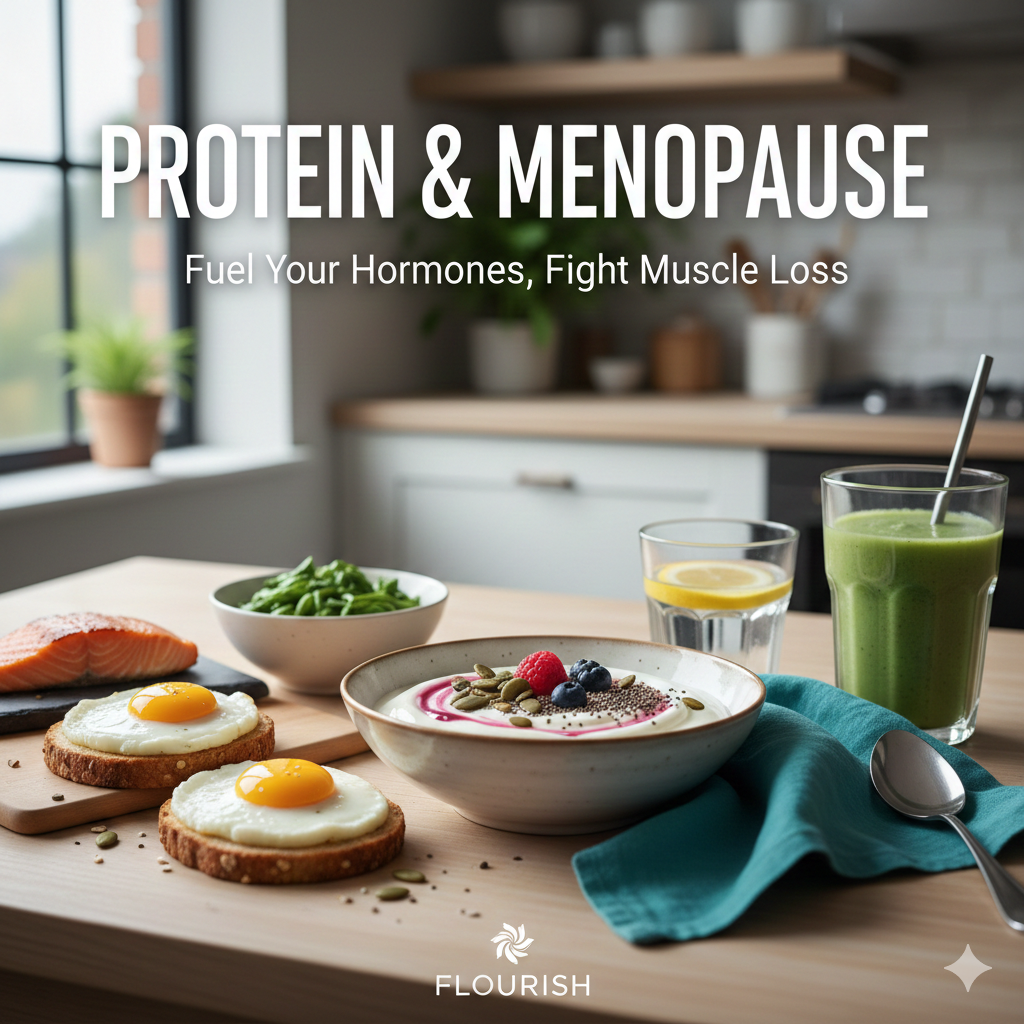
- Animal-Based: Grass-fed whey, wild-caught fish (rich in Omega-3s), eggs, and lean poultry.
- Plant-Based: Tempeh, edamame (contains phytoestrogens!), lentils, and chickpeas.
- The Power of Leucine: This amino acid acts as a “trigger” for muscle growth. High-leucine foods like Greek yoghurt and pumpkin seeds are menopause superstars.
👉The Ultimate Guide to the Best Diet for Menopause: What to Eat (and to Avoid) to Thrive
👉Menopause-Friendly Gut & Bone Health Diet and Lifestyle Plan
FAQs: Protein & Menopause ❓
Q: Will a high-protein diet damage my kidneys? A: For individuals with healthy kidney function, research confirms that high protein intake does not adversely affect kidney health.
Q: Can I get enough protein on a vegan diet? A: Yes, but you must be strategic. Combining different plant sources ensures you get a full spectrum of amino acids. Focus on soy products, as they may also help reduce hot flashes.
Q: Should I use protein powder? A: Whole foods are best, but a high-quality whey or pea protein isolate is a convenient tool to hit your targets, especially post-workout.
Summary Checklist for Menopause Success ✅
- Aim for 1.2g – 1.6g/kg of protein daily.
- Target 25-30g of protein at breakfast to curb evening cravings.
- Pair protein with strength training to overcome anabolic resistance.
- Prioritise anti-inflammatory sources to support gut health.
References
- Sarcopenia and Menopause
- Menopause and Insulin Resistance
- Protein and Bone Health
- Protein Timing and Muscle Synthesis
- Phytoestrogens and menopause
- Kidney Safety and High Protein
- Soy Isoflavones and Hot Flashes
- Resistance Training and Ageing Muscle
Ready to Flourish? 🌸
Optimising your nutrition is the first step toward reclaiming your energy and metabolism. If you’re feeling overwhelmed by hormonal changes, our Flourish: Women’s Hormone & Metabolic Health Program provides a personalised roadmap including doctor-guided nutrition and symptom tracking.
Looking for PCOS support? Check out our [The PCOS Protocol: A 12-Week Physician-Led Hormone & Fertility Restoration] to address insulin resistance and cycle regularity.
Are you struggling to hit your protein goals? Comment “PROTEIN” below, and we’ll send you our High-Protein Menopause Meal Template! 📥

Akanksha Sharma
Dr Akanksha Sharma (MBBS, MD) is a physician and women’s health nutrition specialist, and the founder of IYSA Nutrition. She provides evidence-based, doctor-led nutrition guidance for pregnancy, postpartum recovery, PCOS, child nutrition, and family health, helping women make calm, informed decisions about their health and their children’s well-being.