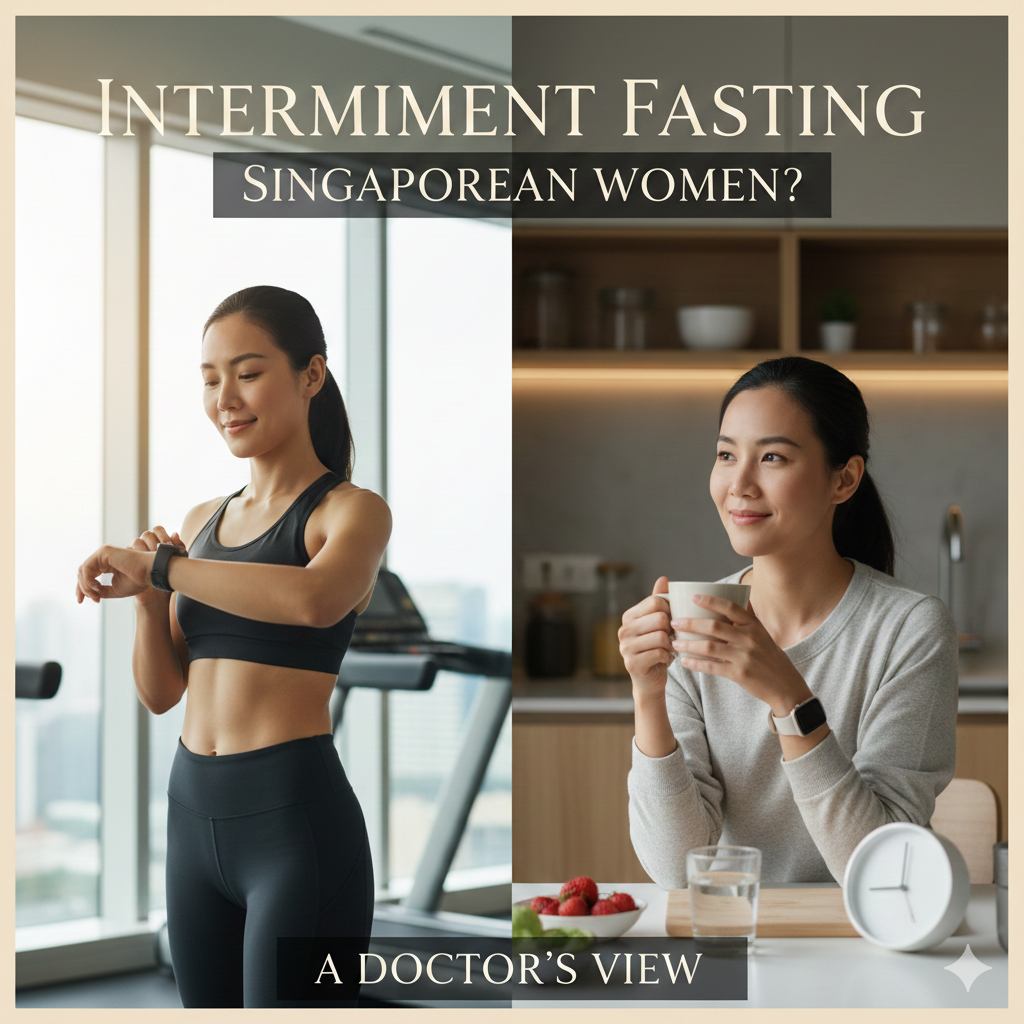
Intermittent fasting (IF) has become one of the most talked-about health trends in Singapore—especially among women juggling work, family, fitness, and metabolic health goals. From 16:8 fasting to OMAD, social media often paints IF as a one-size-fits-all solution for weight loss and blood sugar control.
But as a doctor working closely with women across life stages, I’ll say this clearly:
👉 Intermittent fasting can be helpful for some Singaporean women—but harmful for others if done blindly.
This article breaks down what the science says, who benefits, who should be cautious, and how to do IF safely in the Singapore context.
What is Intermittent Fasting (IF)? ⏰
Intermittent fasting focuses on when you eat, not just what you eat. Common patterns include:
-
12:12 – 12 hours eating, 12 hours fasting (gentle, often overlooked)
-
14:10 – moderate fasting window
-
16:8 – popular protocol (16-hour fast, 8-hour eating window)
-
5:2 – 5 normal days, 2 low-calorie days per week
The idea is to give the body metabolic rest, improve insulin sensitivity, and shift fuel use toward fat.
Why IF appeals to Singaporean women
IF fits well into many urban lifestyles:
-
Busy mornings → skipping breakfast feels “easy”
-
Hawker-based lunches → late first meal
-
Desk jobs → fewer meal breaks
-
Desire for weight control without “dieting”
However, women’s physiology responds differently to fasting than men’s—and this is where nuance matters.
The science: what research actually shows 🧬
1️⃣ IF and insulin sensitivity
But: benefits depend on nutrient quality, not fasting alone.
2️⃣ Women, stress hormones & fasting
Women are more sensitive to energy stress. Prolonged fasting may increase cortisol in some women, especially those already underslept or under-fuelled.
This can lead to:
-
Fatigue
-
Irritability
-
Sleep disturbance
-
Missed periods or cycle irregularities
3️⃣ IF is not superior to calorie balance
👉 Translation: IF is a tool, not magic.
4️⃣ Hormonal life stages matter
Research suggests fasting responses differ across:
Women with hormonal vulnerability may experience worsening symptoms if fasting is aggressive or poorly planned.
5️⃣ Protein intake is critical
Low protein intake during fasting windows can worsen muscle loss and metabolic rate, especially in women over 35–40 years.
When IF may work well for Singaporean women ✅
IF can be helpful if you:
-
Have insulin resistance, PCOS, or prediabetes
-
Are overweight and not chronically dieting
-
Sleep reasonably well
-
Eat adequate protein and fibre
-
Choose early time-restricted eating (e.g. 8 am–6 pm)
In such cases, a 14:10 or gentle 16:8 may improve glucose control and appetite regulation.
👉The Insulin Reset: A Women’s Guide
When IF may backfire ❌
Be cautious—or avoid IF—if you:
-
Are pregnant, breastfeeding, or trying to conceive
-
Have thyroid issues, anaemia, or low BMI
-
Have a history of disordered eating
-
Are highly stressed, sleep-deprived, or over-exercising
-
Experience dizziness, hair fall, missed periods, or binge eating on IF
👉Burnout in High-Achieving Singapore Mothers
A safer IF framework for women (Doctor-approved) 🧠✨
Instead of rigid rules, use this female-friendly approach:
✔ Start with 12:12 or 14:10
This alone improves digestion, sleep timing, and metabolic rhythm.
✔ Eat protein first
Aim for protein at your first and last meal to stabilise blood sugar.
✔ Avoid late-night eating
Early dinner (before 7 pm) often matters more than skipping breakfast.
✔ Match fasting to your cycle
-
Follicular phase → fasting tolerance better
-
Luteal phase → eat more regularly
✔ Hydration ≠ starvation
Water, electrolytes, and mineral balance are essential in Singapore’s humid climate 💧
IF vs “Eating Well Consistently” 🍛
For many women, especially busy mums:
Regular meals with adequate protein, fibre, and sleep outperform strict fasting.
A balanced approach often works better than extremes.
👉How to Eat Healthy While Living in Condos vs HDBs
FAQs ❓
1️⃣ Is skipping breakfast the same as intermittent fasting?
Not always. Skipping breakfast without nutrient balance can increase stress hormones and cravings.
2️⃣ Can IF worsen hormones?
Yes—if fasting is aggressive, calories/protein are too low, or stress is high.
3️⃣ Is IF good for PCOS?
It may help some women with insulin resistance, but timing, protein, and cycle tracking are crucial.
4️⃣ Should women over 40 do IF?
Cautiously. Prioritise muscle, protein, and sleep over long fasts.
5️⃣ What’s the safest fasting window for most women?
12:12 or 14:10, combined with early dinners and good nutrition.
Key takeaway 🌱
Intermittent fasting is not inherently good or bad.
For Singaporean women, its success depends on:
-
Hormonal stage
-
Stress load
-
Nutrient adequacy
-
Lifestyle reality
👉 IF should serve your health—not control it.

Akanksha Sharma
Dr Akanksha Sharma (MBBS, MD) is a physician and women’s health nutrition specialist, and the founder of IYSA Nutrition. She provides evidence-based, doctor-led nutrition guidance for pregnancy, postpartum recovery, PCOS, child nutrition, and family health, helping women make calm, informed decisions about their health and their children’s well-being.