
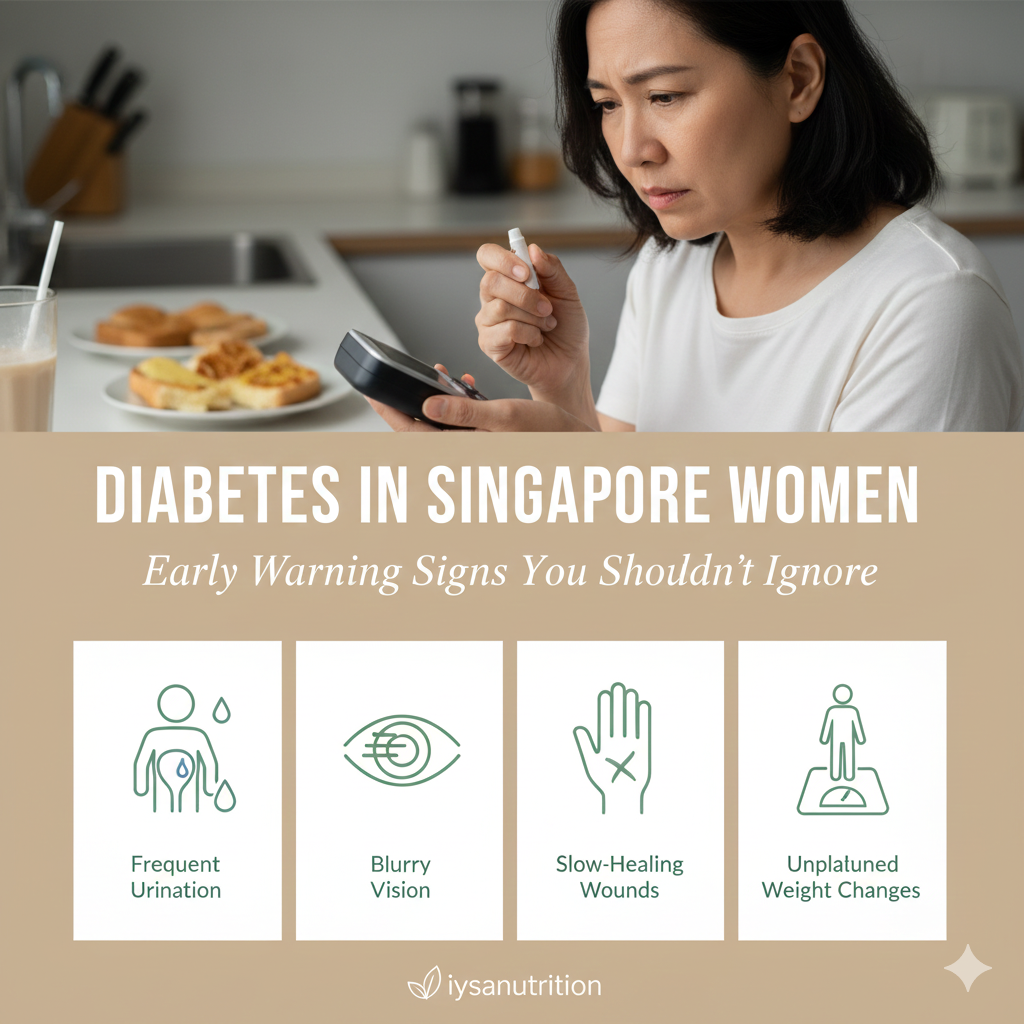
Diabetes in Singapore is often thought of as a “later-life” or male-predominant condition, but women are increasingly affected, and many are diagnosed late, only after complications begin.
What makes diabetes in women particularly tricky is that early symptoms are subtle and often dismissed as stress, hormonal changes, or ageing. Research shows that Asian populations develop diabetes at lower BMI and waist circumference compared to Western populations. 😊
Why diabetes in women often goes unnoticed 🧠
Women commonly attribute early symptoms to:
-
work and caregiving stress
-
poor sleep
-
postpartum recovery
-
perimenopause or hormonal fluctuations
However, insulin resistance can begin years before diagnosis, even when fasting glucose is normal.
👉The Singapore Woman’s Essential Guide to Early Diabetes Detection
The Singapore context: why women are vulnerable
Asian women are biologically more prone to:
-
visceral (abdominal) fat
-
lower muscle mass
-
earlier insulin resistance
This explains why diabetes often appears despite normal weight, a pattern widely documented in Asian cohorts.
Early warning signs of diabetes in women 🚩
(Often present before sugar levels become “diabetic”)
1️⃣ Persistent fatigue 😴
Insulin resistance interferes with cellular glucose uptake, leading to chronic tiredness—even with adequate sleep
2️⃣ Increasing belly fat 📏
A rising waistline—without major weight gain—is a key marker of visceral fat and metabolic dysfunction, especially in Asian women
👉 Normal Weight but High Sugar? The Singapore Metabolic Trap
3️⃣ Strong cravings after meals 🍩
Post-meal sugar crashes reflect poor insulin sensitivity and exaggerated glucose spikes
4️⃣ Recurrent infections or slow healing 🦠
5️⃣ Skin changes 👀
Darkened neck folds (acanthosis nigricans) and skin tags are classic signs of insulin resistance and should never be ignored
6️⃣ Menstrual irregularities or worsening PCOS 🔄
Insulin resistance directly worsens ovarian hormone imbalance and ovulatory dysfunction
👉 The Insulin Reset: A Women’s Guide
7️⃣ Blurred vision or headaches 🤕
Rapid post-meal glucose fluctuations alter lens hydration and cerebral blood flow—often reversible early on
Women-specific risk factors ⚠️
You are at higher risk if you have:
-
history of gestational diabetes
-
PCOS
-
family history of diabetes
-
sedentary work lifestyle
-
menopause or perimenopause weight gain
-
fatty liver on ultrasound
👉 Perimenopause in Singapore Women: Symptoms Doctors Often Miss
What you can do now (before diabetes develops) ✅
🧋 1) Fix liquid sugar first
Daily sweetened beverages significantly worsen insulin resistance. Reducing sugar-sweetened drinks has strong evidence for diabetes prevention
🍽️ 2) Rebalance meals (not restrict)
A balanced plate with adequate protein, fibre, and controlled carbs improves insulin sensitivity without extreme dieting
👉 How Healthy Is Hawker Food Really? A Doctor’s Breakdown
🚶♀️ 3) Walk after meals
FAQs 🙋♀️🙋♂️
Can diabetes develop even if I’m slim?
-Yes. Asian women frequently develop insulin resistance at lower BMI due to higher visceral fat
Can diabetes be reversed if caught early?
-Prediabetes and early insulin resistance are often reversible with timely lifestyle intervention
Is gestational diabetes linked to future diabetes risk?
-Yes. Women who had gestational diabetes have a significantly higher risk of developing type 2 diabetes later in life, even if blood sugar normalises after delivery. Regular follow-up and lifestyle modification are essential.
Can stress alone cause diabetes?
-Stress does not directly cause diabetes, but chronic stress increases cortisol, which worsens insulin resistance and blood sugar control—especially in women balancing work, family, and caregiving roles.
Should I check insulin levels, not just glucose?
-If available, fasting insulin can help detect early insulin resistance before glucose or HbA1c becomes abnormal. This is particularly useful in women with PCOS, belly fat, or strong family history.
Do menopause and ageing increase diabetes risk in women?
-Yes. Declining estrogen during perimenopause and menopause promotes visceral fat gain and reduces insulin sensitivity, increasing diabetes risk even without significant weight gain.
👉 Unsure whether your symptoms are hormonal or metabolic?
Book a doctor-led nutrition consultation for early diabetes risk assessment.

Akanksha Sharma
Dr Akanksha Sharma (MBBS, MD) is a physician and women’s health nutrition specialist, and the founder of IYSA Nutrition. She provides evidence-based, doctor-led nutrition guidance for pregnancy, postpartum recovery, PCOS, child nutrition, and family health, helping women make calm, informed decisions about their health and their children’s well-being.