By Dr. Akanksha Sharma
Let’s be real: Menopause can feel like your body has suddenly decided to speak a different language. The hot flashes, the mood swings, the sleep disruptions, and yes, that stubborn shift on the scale; it’s a lot to navigate. 🥵
While you cannot control the natural decline of estrogen, you have incredible power over how your body responds to it. The most potent tool in your arsenal isn’t necessarily a prescription pad; it’s on your plate.
Nutrition during this transition isn’t about restriction or “crash dieting” to reclaim your 30-year-old body. It’s about nourishment. It’s about providing the fuel your changing physiology desperately needs to protect your bones, brain, and heart, while managing those frustrating symptoms.
Here is your evidence-based roadmap to the best diet for menopause, cutting through the noise to focus on what truly works. ✨
Why Your Diet Matters More Now Than Ever
Before we dive into the food lists, it’s crucial to understand the “why.”
When estrogen levels drop during perimenopause and menopause, it’s not just reproductive functions that change. Estrogen has a protective role in metabolism, bone density, heart health, and insulin sensitivity. Without it, you become more prone to:
-
Visceral fat storage (the belly fat deep inside the abdomen).
-
Bone loss (osteopenia and osteoporosis).
-
Insulin resistance (making blood sugar harder to manage).
-
Cardiovascular issues.
A strategic, anti-inflammatory nutritional approach can help mitigate these risks and turn down the volume on daily symptoms.
👉Fitness After 40: Why It Feels Different (And What To Do)
The “Menopause Power Plates”: What to Eat 🥦
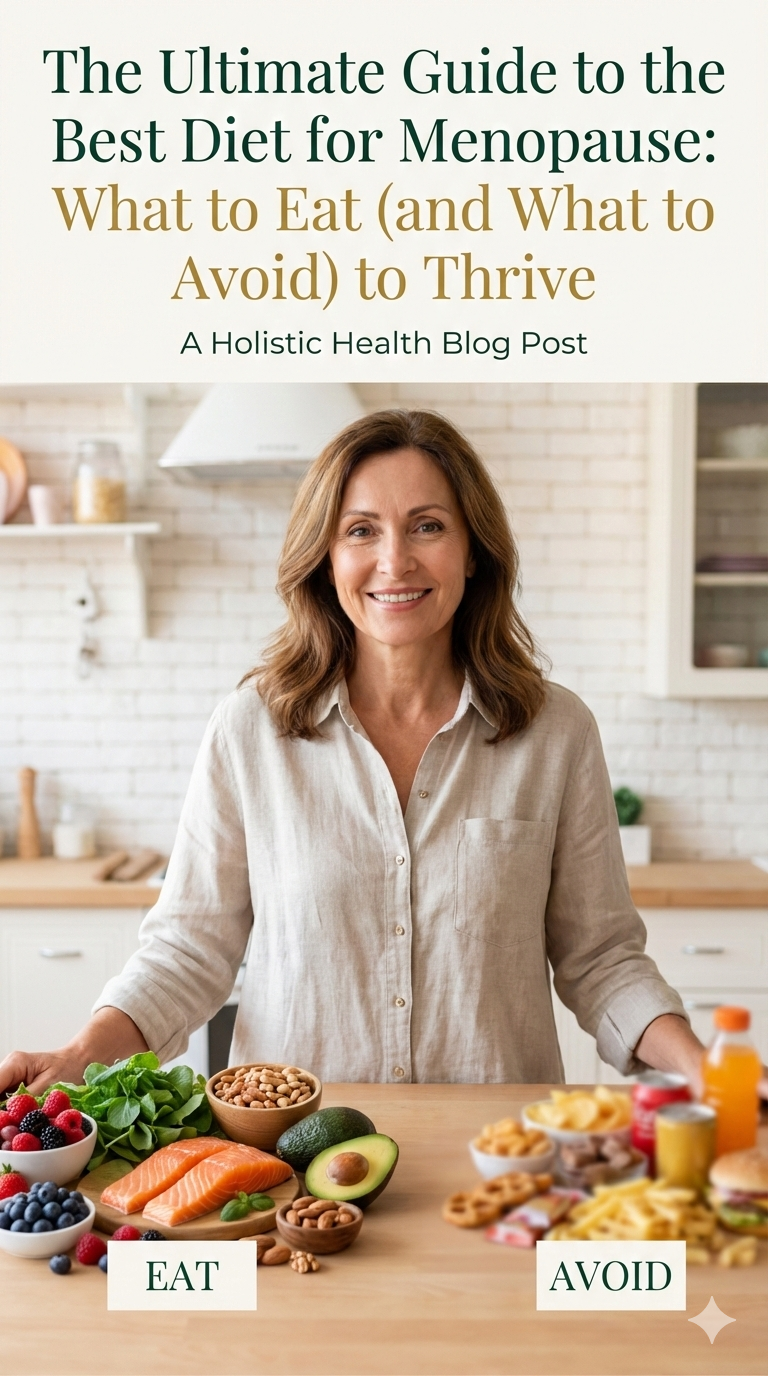
The best diet for menopause isn’t a rigid “plan.” It’s a lifestyle shift towards nutrient-dense, anti-inflammatory foods. Think of this as the Mediterranean Diet adapted for midlife.
1. Phytoestrogens: Nature’s Gentle Mimics
Phytoestrogens are plant compounds that have a weak estrogen-like effect in the body. While not nearly as strong as human estrogen, they can bind to estrogen receptors and may help “soften the landing” of hormonal drops, particularly for hot flashes.
Studies have shown that dietary intake of soy isoflavones (a type of phytoestrogen) can significantly reduce the frequency and severity of hot flashes in menopausal women.
-
Eat More: Organic tofu, tempeh, edamame, flaxseeds (ground), and sesame seeds.
2. Calcium and Vitamin D: The Bone Defenders 🦴
The first five years post-menopause can see rapid bone loss. You cannot afford to skimp on these two nutrients.
-
Eat More: Dairy products (yogurt, kefir, cheese), calcium-fortified plant milks, leafy green vegetables (kale, collard greens), and fatty fish like sardines (with bones).
-
Note: Vitamin D is hard to get from food alone. Get your levels checked; supplementation is often necessary.
3. Healthy Fats & Omega-3s: Brain & Heart Fuel
The decline in estrogen can affect mood regulation and increase heart disease risk. Healthy fats are non-negotiable for cognitive health and lowering inflammation. Research confirms that adherence to a Mediterranean-style diet, rich in healthy fats, is associated with better metabolic health in postmenopausal women.
-
Eat More: Fatty fish (salmon, mackerel), avocados, extra virgin olive oil, walnuts, and chia seeds.
4. Quality Protein: Muscle Maintenance 💪
As we age, we naturally lose muscle mass (sarcopenia), which slows metabolism. Menopause accelerates this. To maintain muscle and stay strong, you need adequate protein at every meal. Higher dietary protein intake is crucial in older women to maintain physical function and muscle mass.
-
Eat More: Eggs, lean poultry, fish, Greek yoghurt, lentils, beans, and high-quality protein powders if needed.
👉Protein for Menopause: Are You Eating Enough?
5. Fibre-Rich Complex Carbs: The Gut-Weight Connection
Forget low-carb trends; you need the right carbs. Fibre is essential for managing blood sugar, keeping you full, and feeding a healthy gut microbiome (which plays a role in estrogen metabolism). Furthermore, increased dietary fibre is strongly linked to reduced risk of cardiovascular disease, a primary concern post-menopause.
-
Eat More: Quinoa, oats, sweet potatoes, berries, apples, beans, and lentils.
👉Menopause Diet for Indian Women Living in Singapore: A Doctor-Approved Guide
👉Menopause-Friendly Gut & Bone Health Diet and Lifestyle Plan
Foods to Navigate Carefully: What to Avoid (or Limit) 🍷
Just as important as what you eat is what you might need to dial back. These foods can exacerbate inflammation, trigger hot flashes, and mess with your blood sugar.
It has been documented that dietary patterns high in processed foods and sugars are associated with more severe menopausal symptoms.
1. Ultra-Processed Foods and Added Sugars
Your body becomes less tolerant of sugar during menopause due to increased insulin resistance. Sugary snacks, white bread, and processed meals lead to blood sugar spikes that contribute to belly fat and mood crashes.
2. Excessive Alcohol and Caffeine
Sad but true: your tolerance may shift. For many women, alcohol and high doses of caffeine are direct triggers for hot flashes, night sweats, and anxiety. They can also disrupt sleep, which is already fragile during this time.
3. High-Sodium Foods
Bloating and water retention are common menopausal complaints. Excess salt in processed meats, canned soups, and restaurant meals makes this worse and can negatively impact bone density.
💡 Practical Snapshot: A Day on the Menopause Diet
-
Breakfast: Greek yoghurt (protein + calcium) with 2 Tbsp ground flaxseed (phytoestrogens) and a cup of berries (fibre/antioxidants).
-
Lunch: A large salad with dark leafy greens, half an avocado (healthy fat), 4oz grilled salmon (omega-3s + protein), and an olive oil dressing.
-
Snack: An apple with a handful of walnuts.
-
Dinner: Stir-fry with tofu or lean chicken, broccoli, bell peppers, and snap peas served over a small bed of quinoa.
Frequently Asked Questions (FAQs) 🤔
Q: Why am I gaining weight around my middle even though I haven’t changed how I eat? A: The drop in estrogen changes how your body stores fat, shifting it from hips/thighs to the abdomen. Furthermore, you naturally lose muscle mass as you age, slowing your basal metabolism. The “best diet for menopause” focuses on protein and fibre to counteract this metabolic slowdown.
Q: Is soy safe to eat? I heard it causes cancer. A: This is a common myth. Current research indicates that moderate consumption of whole soy foods (like tofu and edamame) is safe for most women and may actually be protective against breast cancer recurrence, while helping with hot flashes. Always consult your oncologist if you have a history of estrogen-sensitive cancer.
Q: Should I try Keto or Intermittent Fasting for menopause weight loss? A: Proceed with caution. While they work for some, menopause is already a time of high stress on the body (adrenal strain). Extreme restriction or long fasting windows can sometimes increase cortisol (stress hormone) levels, making symptoms worse and holding onto belly fat. A balanced, anti-inflammatory approach is usually more sustainable.
Conclusion: Your Second Act
Menopause is not a disease; it is a natural transition. By embracing the best diet for menopause—one rooted in whole foods, healthy fats, and adequate protein—you are not just managing symptoms. You are laying the foundation for a vibrant, strong, and healthy second half of your life.
Listen to your body, be patient with the changes, and nourish yourself well. You deserve it. 💖
Ready to take control of your menopausal journey?
Don’t navigate this transition alone. If you are struggling with weight gain, debilitating symptoms, or confusion about what to eat, let’s create a personalized roadmap for you.
👉 Menopause Metabolic Reset (For 50+ Women)
👉Book a FREE Consultation call
References
-
Taku, K., et al. (2012). Extracted or synthesized soybean isoflavones reduce menopausal hot flush frequency and severity: systematic review and meta-analysis of randomized controlled trials. Menopause (New York, N.Y.), 19(7), 776–790. https://pubmed.ncbi.nlm.nih.gov/22433977/
- Bajerska, J., et al. (2025). Association Between Adherence to the Mediterranean Diet and Metabolic Syndrome and Its Components Among Polish Postmenopausal Women: A Cross-Sectional Study. Nutrients, 17(17), 2727. https://www.mdpi.com/2072-6643/17/17/2727
-
Gregorio, L., et al. (2014). Adequate dietary protein is associated with better physical performance among post-menopausal women 60-90 years. The journal of nutrition, health & aging, 18(2), 155–160. https://pubmed.ncbi.nlm.nih.gov/24522467/
-
Slavin, J. L. (2013). Dietary fiber and body weight. Nutrition (Burbank, Los Angeles County, Calif.), 21(3), 411–418. https://pubmed.ncbi.nlm.nih.gov/23609775/
-
Soleymani, M., et al. (2019). Dietary patterns and their association with menopausal symptoms: a cross-sectional study. Menopause, 26(4):365-372. https://pubmed.ncbi.nlm.nih.gov/30363011/
🔗 You May Also Find These Readings Helpful:
-
[A Doctor’s Natural Approaches for Perimenopause Symptom Relief]
- [Beyond the Hot Flashes: Exploring Testosterone Therapy for Women]

Akanksha Sharma
Dr Akanksha Sharma (MBBS, MD) is a physician and women’s health nutrition specialist, and the founder of IYSA Nutrition. She provides evidence-based, doctor-led nutrition guidance for pregnancy, postpartum recovery, PCOS, child nutrition, and family health, helping women make calm, informed decisions about their health and their children’s well-being.